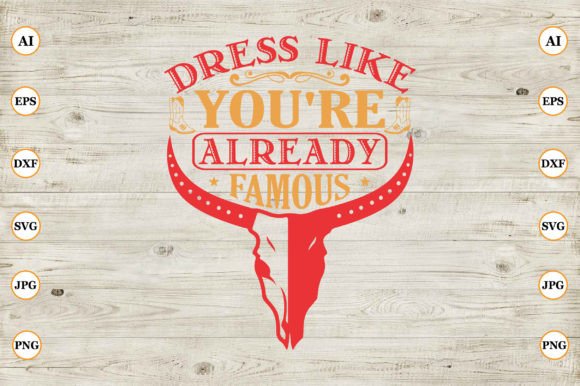
Dress Like You re Already Famous: A Designer’s Review
When I pull a new digital file from the internet, my first instinct isn’t to load it into the hoop immediately. It is to look at it, really look at it, and ask myself if it will survive the translation from screen to stitch. Dress Like You re Already Famous is one of those files that demands a closer look. As a designer who spends half her life troubleshooting tension issues and the other half trying to make handmade products feel premium, I approach every embroidery file with a mix of optimism and skepticism.
This design falls squarely into the Crafts and Graphics categories, but its utility stretches far beyond simple decoration. It carries a specific mood—one of confidence, nostalgia, and playful ambition. The text-based nature of the phrase "Dress Like You re Already Famous" makes it a versatile asset for any custom apparel or personalized gift line, provided you understand how typography behaves under a needle.
First Impressions and Visual Personality
The immediate appeal of this design lies in its boldness. In a market saturated with intricate florals and complex pictorial scenes, a strong typographic statement stands out. The layout suggests a modern, perhaps slightly retro vibe, which aligns perfectly with current trends in boutique branding and Etsy seller aesthetics. It feels like something you would see on a high-end streetwear label or a curated gift shop display.
For an embroidery project, the visual weight is crucial. This design doesn’t rely on subtle shading; it relies on clear lines and readable shapes. This makes it an excellent candidate for machine embroidery design work where clarity is king. The personality is upbeat and empowering, making it particularly effective for handmade product lines targeting young adults, creative entrepreneurs, or anyone looking for a morale-boosting accessory.
Real-World Application: From Screen to Stitch
Let’s talk about real use. Imagine you are preparing a batch of custom embroidered tote bags for a local craft fair. You want something that pops off the rack but doesn’t require three hours of stitching per bag. Dress Like You re Already Famous fits this scenario beautifully. The text can be executed cleanly, allowing for quick turnaround times without sacrificing quality.
I also see this design thriving on sweatshirt embroidery. There is a cozy, casual energy to a crewneck sweatshirt paired with a confident slogan. When stitched onto a thick cotton blend, the texture of the fabric complements the boldness of the letters. Similarly, for baby embroidery, this phrase could be adapted for a onesie or a nursery wall hanging, offering a humorous touch for parents who appreciate wit alongside cuteness.
Another strong application is the embroidered patch. Whether attached to a denim jacket or a backpack, this design translates well into a standalone emblem. The graphic nature means it holds up even when reduced in scale, provided the digitization accounts for small details. For small business merchandise, such as branded aprons or tea towels, this design adds a layer of professionalism and brand voice that generic patterns simply cannot match.
Where Caution Is Required
No design is perfect for every surface, and Dress Like You re Already Famous has its limitations. Text-based designs are notoriously unforgiving on curved surfaces. If you plan to stitch this on a cap or a hat, you must ensure your hoop size and stabilizer choice are precise. Curved fabrics can distort letter spacing, turning a sharp message into a wobbly one. Test carefully on a scrap piece of the same material before committing to the final product.
Fabric texture is another critical factor. While this design looks crisp on smooth cotton or polyester blends, it may struggle on highly textured fabrics like heavy boucle or loose-weave linen. The stitch density needs a relatively flat surface to lay evenly. On stretchy fabrics, such as thin jersey knits, you must use a strong stabilizer to prevent puckering. If the base fabric distorts, the integrity of the entire phrase collapses.
Furthermore, consider the contrast. Embroidery thread reflects light differently than printed ink. If you are working with dark fabric, you need bright, opaque threads to ensure readability. Conversely, on very light fabrics, dark threads provide necessary definition. Always inspect small details and tiny lettering in your mockups. If the original graphic includes fine serifs or tight kerning, these elements may merge together during stitching, creating a muddy appearance. Check whether the design works for both personal and commercial projects by reviewing the level of detail against your machine’s capabilities.
Impact on Product Value and Customer Trust
Quality execution directly influences customer trust. A well-stitched finished product signals attention to detail. When a buyer receives a tote bag or a sweatshirt with clean, taut stitches and no visible backing showing through, they perceive higher value. This design, when done right, elevates the perceived worth of the item. It moves beyond a mere novelty item to a statement piece.
For commercial embroidery clients, this design offers versatility. It appeals to a broad demographic, reducing the risk associated with niche themes. Its positive message encourages engagement and social sharing, which is invaluable for craft business growth. A customer wearing a sweatshirt with this phrase is essentially walking advertising, provided the embroidery looks professional.
Practical Notes for the Embroidery Designer
Before you commit to production, follow these practical steps:
- Test on Scrap Fabric: Never assume a design will stitch out perfectly on the final material. Run a test on scraps of your intended fabric to check for tension issues and distortion.
- Review Stitch Density: High-density fills can cause bulkiness, especially on lightweight garments. Ensure the digitization balances coverage with flexibility.
- Check Thread Color Contrast: Use black-and-white mockups to verify legibility. Colors can deceive the eye; grayscale reveals true contrast levels.
- Confirm Hoop Size: Ensure your embroidery machine can accommodate the full width and height of the design without awkward re-hooping.
- Inspect Small Details: Zoom in on the digital file. Are there any overly thin lines that might break during stitching? Simplify if necessary.
- Stabilizer Selection: Match your stabilizer to the fabric weight. Cut-away stabilizers are generally safer for stretchy or heavy items, while tear-away may suffice for stable woven fabrics.
- Licensing Verification: Crucially, confirm licensing before selling finished items or digital products. Ensure you have the rights to use Dress Like You re Already Famous for commercial purposes.
In conclusion, Dress Like You re Already Famous is a strong contender for designers looking to add a touch of attitude to their portfolio. It is not just a digital download cutting file; it is a tool for creating memorable, wearable art. By respecting its technical requirements and understanding its visual strengths, you can create design assets that resonate with buyers and stand the test of time.