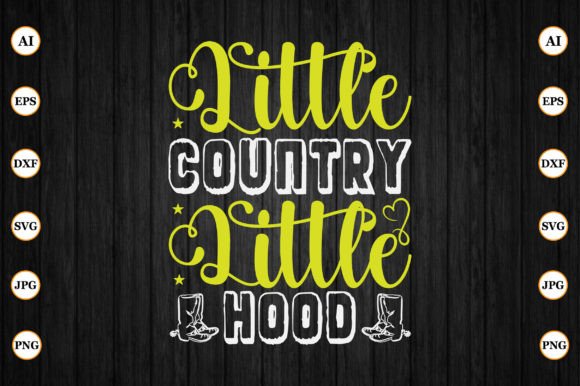
Little Country Little Hood Review
As a designer who spends more time staring at stitch patterns than actual artwork these days, I approach every new download with a healthy dose of skepticism. The market is saturated with "cute" designs that look charming on screen but fall apart under the needle. That is why when I pulled up Little Country Little Hood, I didn't just look at the preview image; I mentally ran it through my embroidery workflow. I wanted to see if this Western-themed digital asset had the structural integrity and aesthetic charm required for real-world application, whether for a personal gift or a boutique inventory item.
The immediate first impression of Little Country Little Hood is one of cozy, rustic nostalgia. It captures that specific "little country" vibe—think dusty boots, wide-brimmed hats, and quiet mornings on a porch—without being overly cluttered. For an embroidery project, simplicity is often the hardest thing to achieve. Too much detail can turn into a muddy mess in satin stitch, while too little can feel flat. This design strikes a balance. It feels like a classic Western motif, likely featuring a hooded silhouette or hat element that reads clearly even from a distance. It has a visual personality that fits perfectly into the current trend of handmade, artisanal goods that prioritize storytelling over flashy graphics.
Real-World Application: From Screen to Stitch
I put Little Country Little Hood through its paces by imagining it on various substrates. My first scenario was a custom sweatshirt for a client’s daughter. Western themes are timeless in children’s wear, but they need to be soft and not overwhelming. Because this design appears to be a single-file graphic (likely vector-based given the AI and SVG inclusion), it translates well to a chest-sized embroidery placement. On a heather grey or cream fleece, the contrast would be clean. The mood is gentle enough for a nursery pillow cover yet rugged enough for a toddler’s denim jacket.
Next, I considered a tote bag design. Canvas totes are workhorses in the craft business, and adding an embroidered patch or direct embroidery elevates them from generic merchandise to a premium product. Little Country Little Hood works beautifully here. The Western theme suggests durability and outdoor activity, which aligns with the utility of a tote. If used as an applique design, the layered fabric could add texture that plain thread cannot achieve, giving the finished product a tactile quality that customers love to touch.
For holiday embroidery, this design has serious potential. Think of it on a kitchen towel or a tea towel. The "country" aesthetic pairs naturally with farmhouse decor trends. A small, centered embroidery of this motif on a linen blend towel makes for an incredibly giftable item. It feels personal, thoughtful, and useful. Similarly, for baby embroidery, placing this on a muslin swaddle or a onesie creates a keepsake item. Parents are looking for items that feel authentic, not mass-produced, and the handcrafted nature of machine embroidery supports that desire.
Where Caution Is Required
No design is universal, and Little Country Little Hood is no exception. As an experienced reviewer, I must point out where this file might struggle. If you plan to use this on curved surfaces like caps or hats, you need to be careful. The layout of the design matters immensely here. If the hood element is wide, it may distort on the front panel of a baseball cap unless you use a rigid stabilizer and a proper hoop frame. Always test the fit before committing to a batch production.
Textured fabrics are another minefield. While a heavy wool coat looks amazing with Western motifs, thin or stretchy knits can pucker if the stitch density is too high. You need to inspect the fill stitch areas closely. If the design relies on dense coverage to maintain its shape, it will fight against the natural drape of t-shirts or lightweight leggings. In these cases, a running stitch outline or a lighter fill might be necessary, but that depends entirely on the source file's construction.
Dense stitch areas should always be scrutinized. If the "hood" part of the design includes intricate details or tiny lettering, it might become illegible after stitching, especially if you are using lower-quality thread. Thread colors play a huge role here. On dark fabric, light threads can get lost, making the design look faint. Conversely, dark threads on black fabric offer no contrast. I recommend testing your thread choices on scrap fabric that matches your final product exactly. Don't guess; stitch it out first.
Impact on Product Value and Brand Consistency
Using a well-executed design like Little Country Little Hood directly impacts customer trust. When a buyer sees a clean, professional embroidery job, they assume the entire brand is professional. Sloppy stitches or misaligned elements signal carelessness. By choosing a design with clear lines and a strong visual identity, you are signaling quality. This is crucial for Etsy sellers and small shop owners who compete on aesthetics.
The design also enhances the perceived value of the finished product. A plain tote bag sells for $10. A tote bag with a custom, neatly embroidered Western motif sells for $25 because it feels unique. The "handmade" label carries weight, and the embroidery reinforces that narrative. It transforms a commodity into a piece of art. For commercial embroidery projects, this means higher margins and better customer retention. People buy stories, and a "Little Country" theme tells a story of simplicity, tradition, and comfort.
Practical Designer Notes for Success
- Test on Scrap Fabric: Never go straight to the final garment. Use the same fabric and stabilizer combination you plan to sell with. This reveals puckering issues and color clashes early.
- Check Stitch Density: Review the design files to ensure the stitch count isn't excessive for the fabric type. Dense fills on thin cotton will cause damage.
- Hoop Size Matters: Confirm that the design fits comfortably within your standard hoop sizes. If it requires a large hoop, ensure you have the equipment to handle it without distortion.
- Black and White Mockups: View the design in grayscale to check contrast. If the shapes blend together in black and white, they will likely look muddy in color.
- Licensing Check: Before selling any finished items, verify the license terms included with the digital download. Some files are for personal use only, while others allow commercial sales of physical goods. Do not assume.
- Stabilizer Selection: Use the right stabilizer for the job. Cut-away for stretchy fabrics, tear-away for wovens. Proper support ensures the design stays crisp after washing.
In conclusion, Little Country Little Hood is a versatile addition to any designer’s library. It bridges the gap between cute and cool, making it suitable for a wide range of products from baby items to adult apparel. Its Western theme is evergreen, and its likely clean line work makes it reliable for machine execution. Just remember: the best designs fail if the execution is sloppy. Take your time, test thoroughly, and let the quality of your craftsmanship speak for itself. Whether you are creating a personalized gift for a friend or building your next best-selling Etsy listing, this design has the potential to deliver a polished, professional result.
For those looking to expand their design assets, this file offers good flexibility. With formats like AI, SVG, and PNG included, you aren't limited to just embroidery machines. You can use the vector files for vinyl cutting or printing, though the primary strength lies in its potential as a machine embroidery design. It is a smart investment for anyone in the crafts and graphics space who wants to add a touch of rustic elegance to their custom apparel offerings.