Indian Skull Vector Drawing: An Embroidery Designer’s Review
As a designer who spends half my life staring at stitch charts and the other half trying to explain to clients why their favorite photo won’t digitize well, I have developed a fairly strict set of criteria for any new asset I bring into my workflow. When I first encountered the Indian Skull Vector Drawing, I didn’t just see a graphic; I saw a potential conflict between high-contrast vector art and the physical limitations of thread. This review is not about marketing fluff. It is a practical evaluation of how this specific design translates from a screen to a hoop, and whether it holds up as a viable asset for serious embroidery projects.
The First Impression: Mood and Visual Weight
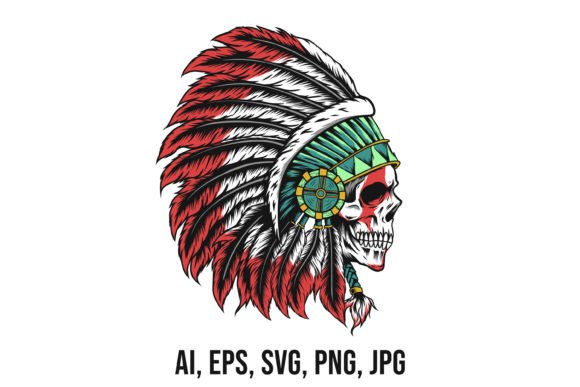
The moment you open the file, the visual personality of the Indian Skull Vector Drawing is undeniable. It carries a heavy, symbolic weight that leans heavily into cultural iconography mixed with modern tattoo aesthetics. The description tags—mentioning elements like wings, eagles, and apache symbolism alongside the skull—suggest a composition that is likely intricate and layered. For an embroiderer, "intricate" is a double-edged sword. It promises a stunning finished product, but it also threatens to become a muddy mess if the digitization isn’t handled with precision.
The color palette implied by the tags (red, white, black) is classic for this genre. In embroidery, these colors offer excellent contrast against most mid-tone fabrics, which is a relief. However, the isolation of the design means it relies entirely on its own shape to command attention. There is no background to hide behind. If the stitching density is off, or if the satin stitches are too wide, the delicate lines of the eagle wings or the tribal patterns around the skull will collapse into one another. My initial assessment is that this design demands respect. It is not a quick fill-stitch job; it is a statement piece that requires careful planning.
Real-World Application: Where Does This Design Belong?
To determine if a design is truly useful, you have to imagine it on a product. I spent some time mentally mocking up the Indian Skull Vector Drawing on various items in my studio, and the results were telling.
Custom Apparel and Streetwear: This design screams custom apparel. Placing this on the back of a heavyweight cotton sweatshirt or a structured denim jacket would yield a professional, boutique-level result. The bold lines of the skull would translate well to larger hoop sizes, allowing the digitizer to use varied stitch directions to create texture in the feathers and bone structure. For Etsy sellers and small shop owners looking to create unique, non-generic merchandise, this is a strong contender. It fits perfectly into the niche of alternative fashion, biker culture, or spiritual streetwear.
Embroidered Patches and Caps: Because the design appears isolated, it lends itself naturally to patch work. A circular or shield-shaped patch featuring this skull could be a standout item at craft fairs. However, placing this on a curved surface like a baseball cap presents challenges. The symmetry of the skull must be preserved, and the curvature of the front panel might distort the wider parts of the eagle wings unless the design is slightly adjusted during digitization. It works best on flat surfaces or structured hats with ample space.
Home Decor and Textiles: I also considered using this on a kitchen towel or a pillow cover. While the aesthetic is edgy, it can add a striking focal point to a neutral-toned linen pillow. For holiday gifts, particularly around Halloween or Day of the Dead celebrations, this design offers a sophisticated alternative to cartoonish ghosts or pumpkins. It appeals to adults who appreciate art over cliché.
Technical Considerations and Potential Pitfalls
Not every digital file survives the transition to fabric intact. Here is where we need to get technical about the machine embroidery design aspects of this project.
Stitch Density and Detail: The primary risk with any skull or tribal design is the loss of fine detail. If the original vector has hairline-thin strokes, they may not hold up in embroidery. We need to look closely at how the digitizer handles the negative space. Are the gaps between the ribs of the skull clear? Is the separation between the eagle’s talons distinct? If the stitch density is too high, the fabric will pucker, and the design will look stiff. Conversely, if it is too low, the backing material will show through, ruining the clean look of the Indian Skull Vector Drawing.
Fabric Compatibility: This design should be used carefully on stretchy fabrics like thin jersey knits. The tension required to pull the threads tight enough to define the skull’s features might cause the fabric to pucker excessively. It performs best on stable, woven fabrics like canvas, felt, denim, or heavy cotton twill. These materials provide the necessary stability for the complex geometry of the wings and head.
Thread Color Strategy: The red and white elements suggest a multi-color run. If you are working with a single-color machine, you will need to choose your base fabric wisely. White thread on black fabric will make the skull pop, but the red accents might need to be omitted or substituted with a contrasting dark thread. Always test your thread colors against your actual fabric swatch before committing to a full production run.
Practical Advice for the Embroidery Designer
If you decide to incorporate the Indian Skull Vector Drawing into your business or personal projects, follow these steps to ensure a professional outcome:
- Test on Scrap Fabric: Never trust a digital preview completely. Stitch the design out on the exact type of fabric and stabilizer you plan to use. Check for puckering, thread breaks, and clarity of detail.
- Inspect Small Details: Zoom in on the digitized version. Look at the corners of the eagle wings and the inner curves of the skull. Do they look sharp, or do they appear blobby? You may need to manually adjust the stitch paths to improve definition.
- Check Hoop Size Constraints: Ensure the design fits within your standard hoop sizes without requiring awkward re-hooping. If the design is large, consider splitting it or resizing it proportionally to avoid losing critical details.
- Verify Licensing: Before selling finished products, confirm the commercial usage rights. Many vector sites have different tiers for personal and commercial embroidery use. Selling handmade goods derived from this asset requires explicit permission to avoid legal issues.
- Use Proper Stabilizer: Given the likely complexity of the design, a cut-away stabilizer is recommended to prevent distortion during washing, especially for items like tote bag design applications or sweatshirt embroidery that will see frequent use.
Final Verdict: A Strong Asset for Bold Projects
The Indian Skull Vector Drawing is not a subtle design, and it shouldn’t be. It is bold, culturally rich, and visually arresting. For designers looking to add edge and depth to their portfolio, this is a valuable addition. It works exceptionally well for custom apparel, embroidered patches, and distinctive home decor items.
However, success depends entirely on execution. The difference between a mediocre stitch-out and a premium finished product lies in the preparation. Take the time to understand the stitch structure, choose the right fabric, and respect the details of the original vector. If you do, this design can elevate your craft business offerings and attract customers who appreciate high-quality, meaningful artwork. Just remember: the vector is just the map; the embroidery is the journey. Make sure your technique matches the ambition of the design.